

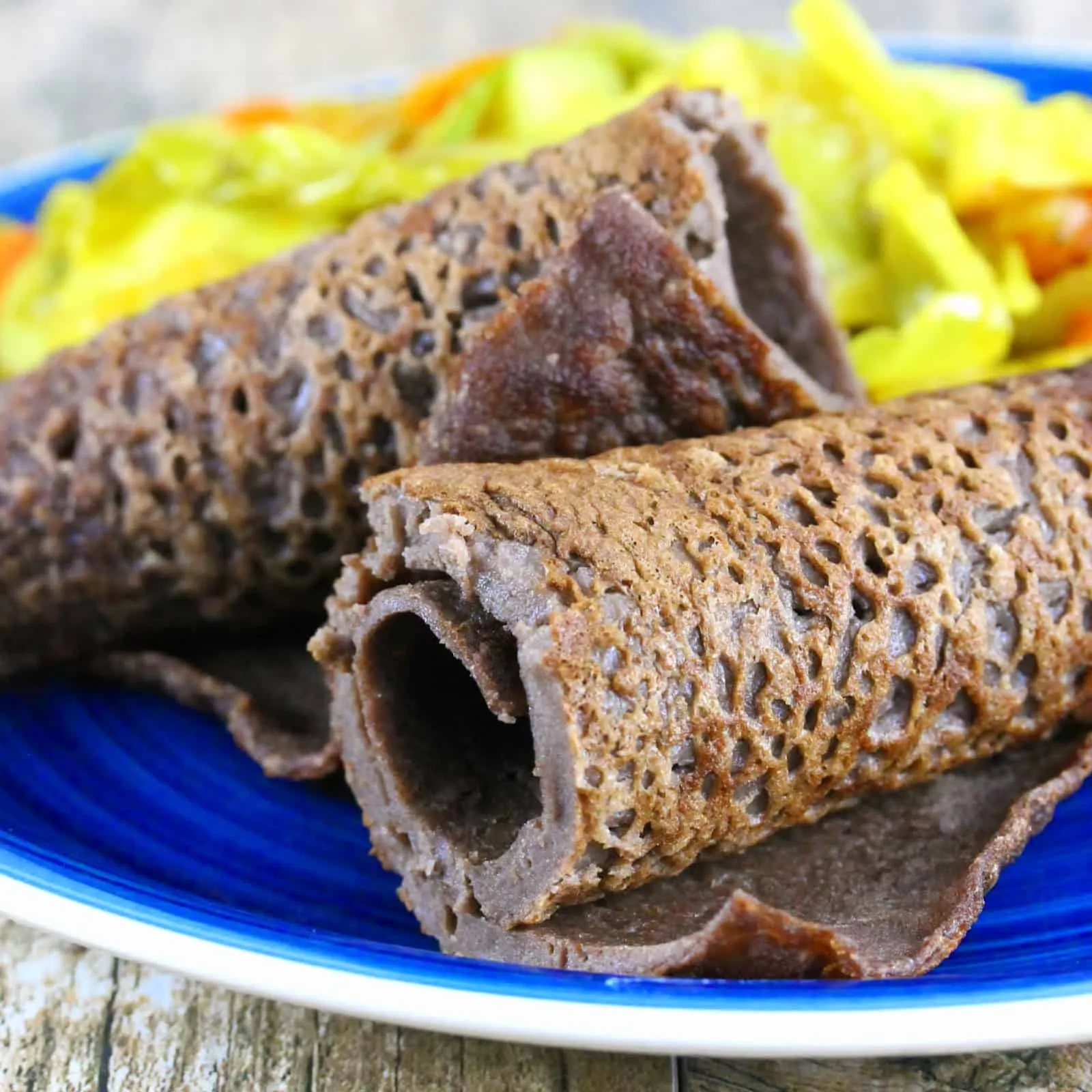
Are you ready to embark on a culinary adventure that transports you straight to the heart of Ethiopia? Discover the unique flavors and textures of Injera, a traditional Ethiopian flatbread that is not only delicious but also a vital part of Ethiopian cuisine. With its tangy flavor and spongy texture, Injera serves as the perfect base for a variety of stews and salads, making every meal a delightful experience. In just 35 minutes, you can create this authentic dish in your own kitchen, impressing family and friends with your newfound skills. Dive into this recipe and unlock the secrets of making perfect Injera that will leave everyone asking for seconds!
Prep Time: 20 mins
Cook Time: 15 mins
Total Time: 35 mins
Cuisine: Ethiopian
Serves: 4-6 servings
Ingredients
- 2 cups teff flour
- 3 cups water
- 1/2 teaspoon salt
- 1 teaspoon baking powder
Instructions
- In a large mixing bowl, combine 2 cups of teff flour and 3 cups of water. Stir the mixture until the flour is fully incorporated and there are no lumps. The batter should be smooth and slightly runny.
- Cover the bowl with a clean kitchen towel or plastic wrap and let it sit at room temperature for 12 to 24 hours. This fermentation process will give the injera its characteristic tangy flavor and texture. The longer you let it ferment, the more sour the flavor will become.
- After the fermentation period, you will notice bubbles forming on the surface of the batter, indicating that it is ready to cook. Stir in 1/2 teaspoon of salt and 1 teaspoon of baking powder to the batter, mixing well to combine.
- Heat a non-stick skillet or a traditional Ethiopian mitad over medium heat. Allow the skillet to get hot, but not smoking. You can test the heat by sprinkling a few drops of water on the surface; they should sizzle and evaporate immediately.
- Once the skillet is hot, pour about 1/2 cup of the batter onto the skillet, tilting the skillet to spread the batter evenly in a circular motion. The batter should form a thin layer, similar to a pancake.
- Cover the skillet with a lid and let the injera cook for about 2-3 minutes. You will see bubbles forming on the surface, and the edges will begin to lift slightly. The injera is done when the surface is set and no longer wet.
- Carefully remove the injera from the skillet using a spatula and place it on a plate. Repeat the process with the remaining batter, stacking the cooked injera on top of each other. You can place a clean kitchen towel between the layers to keep them warm and prevent them from sticking together.
- Once all the injera are cooked, let them cool slightly before serving. Injera is typically served as a base for various Ethiopian stews and salads, allowing diners to tear off pieces and scoop up the food with their hands.
- Enjoy your homemade Ethiopian injera flatbread with your favorite dishes!
Tips
- Fermentation is Key: Allowing your batter to ferment for 12 to 24 hours is crucial for developing that signature tangy flavor. If you prefer a milder taste, opt for a shorter fermentation time.
- Perfecting the Batter: Ensure your batter is smooth and slightly runny before cooking. If it's too thick, add a little more water to achieve the right consistency.
- Heat Matters: Make sure your skillet is hot but not smoking before pouring in the batter. A good test is to sprinkle a few drops of water on the skillet—if they sizzle and evaporate quickly, you’re ready to go!
- Cover While Cooking: Covering the skillet while the Injera cooks helps trap steam, ensuring the bread cooks evenly and forms those lovely bubbles on top.
- Stacking for Warmth: After cooking each piece, stack the Injera on a plate with a kitchen towel in between to keep them warm and prevent sticking.
- Serving Suggestions: Injera is best enjoyed fresh, served alongside your favorite Ethiopian stews like Doro Wat or Shiro. Don’t forget to tear off pieces and use them to scoop up the delicious flavors!
Nutrition Facts
Calories: 120kcal
Carbohydrates: 25g
Protein: 4g
Fat: 1g
Saturated Fat: 0g
Cholesterol: 0mg
