

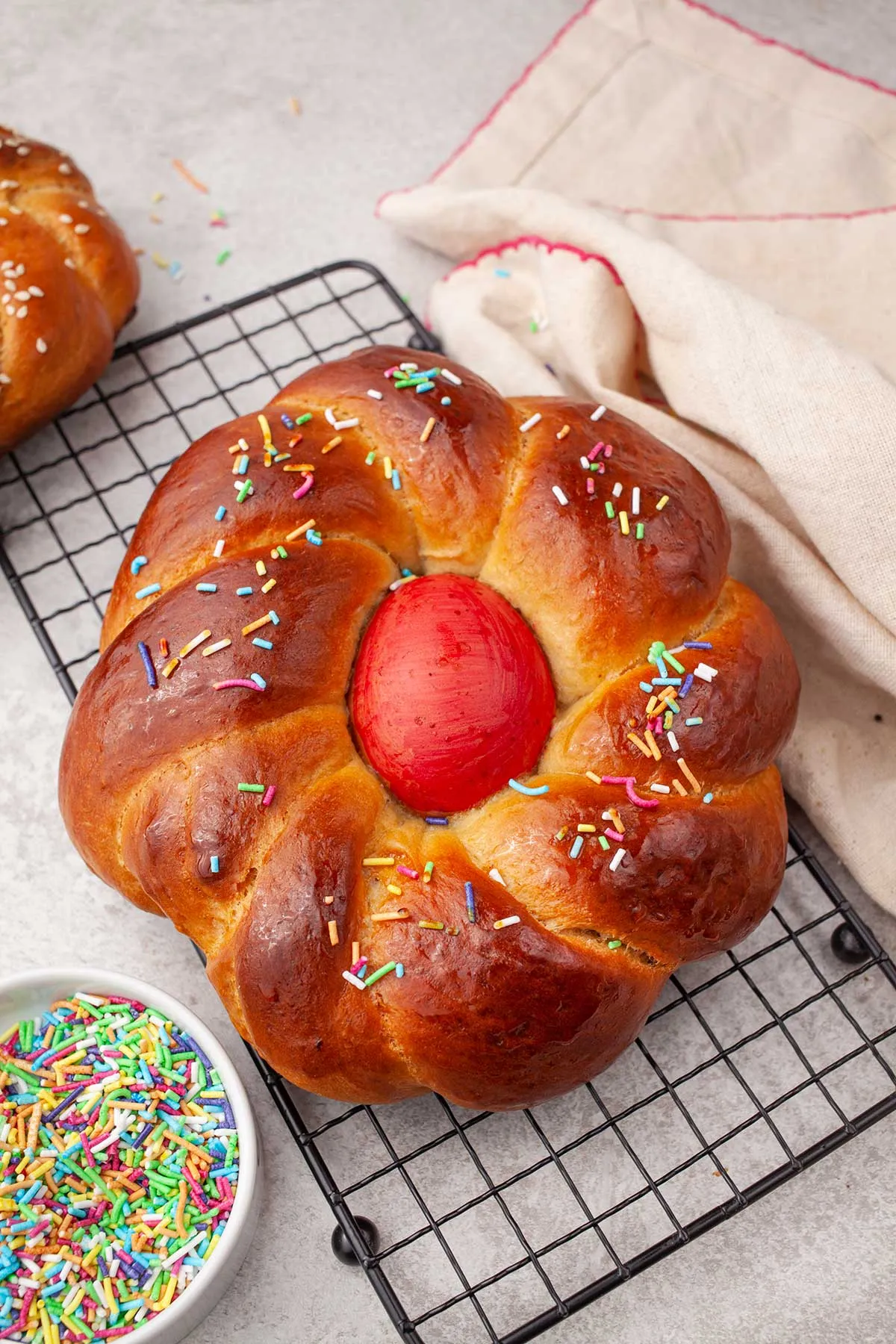
Welcome to the delightful world of Italian Easter Bread, or Pane di Pasqua! This traditional recipe is not just a treat for the taste buds; it’s a beautiful centerpiece for your holiday celebrations. Imagine the sweet aroma of freshly baked bread wafting through your home, as you prepare to share this cherished family recipe with loved ones. With its soft, braided texture and the festive touch of colored eggs, this bread is sure to impress your guests and elevate your Easter feast. Ready to embark on a culinary journey that will fill your kitchen with warmth and joy? Let's dive into the secrets of crafting this delicious Italian classic!
Prep Time: 2 hrs
Cook Time: 30 mins
Total Time: 2 hrs 30 mins
Cuisine: Italian
Serves: 2 loaves
Ingredients
- 4 cups all-purpose flour
- 1 cup sugar
- 1/2 cup milk
- 1/2 cup butter, softened
- 3 large eggs
- 1 packet active dry yeast
- 1 teaspoon salt
- 1 tablespoon anise extract
- Colored eggs for decoration
Instructions
- In a small bowl, combine the warm milk (about 110°F or 43°C) and the active dry yeast. Let it sit for about 5-10 minutes until it becomes frothy. This indicates that the yeast is activated.
- In a large mixing bowl, cream together the softened butter and sugar until light and fluffy. You can use a hand mixer or stand mixer for this step.
- Add the eggs one at a time to the butter and sugar mixture, mixing well after each addition. Then, stir in the anise extract.
- In a separate bowl, whisk together the all-purpose flour and salt. Gradually add the flour mixture to the wet ingredients, alternating with the yeast mixture. Start and end with the flour mixture. Mix until a soft dough forms.
- Turn the dough out onto a floured surface and knead it for about 5-7 minutes until it is smooth and elastic. If the dough is too sticky, you can add a little more flour as needed.
- Place the kneaded dough into a lightly greased bowl, cover it with a clean kitchen towel, and let it rise in a warm place for about 1-
- 5 hours, or until it has doubled in size.
- Once the dough has risen, punch it down to release the air. Divide the dough into two equal portions for the two loaves.
- For each loaf, take one portion of dough and divide it into three equal pieces. Roll each piece into a long rope, about 12-14 inches long.
- Braid the three ropes together to form a loaf shape. Pinch the ends together to seal and tuck them underneath the loaf.
- Place the braided loaves on a baking sheet lined with parchment paper. If desired, you can place colored eggs in the braids for decoration.
- Cover the loaves with a kitchen towel and let them rise again for about 30-45 minutes, or until they have puffed up.
- Preheat your oven to 350°F (175°C) while the loaves are rising.
- Once the loaves have risen, bake them in the preheated oven for 25-30 minutes, or until they are golden brown and sound hollow when tapped on the bottom.
- Remove the loaves from the oven and let them cool on a wire rack. Serve warm or at room temperature. Enjoy your Italian Easter Bread!
Tips
- Activate Your Yeast: Ensure your milk is warm but not hot (around 110°F or 43°C) to effectively activate the yeast. A frothy mixture after 5-10 minutes indicates it's ready to go!
- Knead for Perfection: Knead the dough until it’s smooth and elastic. This step is crucial for developing the gluten, which gives the bread its lovely texture. If the dough feels sticky, sprinkle in a little extra flour as needed.
- Warm Rising Environment: For the best rise, place your dough in a warm, draft-free area. You can create a cozy environment by turning your oven on for a minute, then turning it off and placing the dough inside to rise.
- Don’t Rush the Second Rise: Allow the braided loaves to rise again before baking. This step is essential for achieving that light and airy texture. Patience pays off with a beautifully risen bread!
- Golden Brown Finish: Keep an eye on your loaves as they bake. They should be golden brown and sound hollow when tapped on the bottom. If they’re browning too quickly, cover them loosely with aluminum foil.
- Decorate with Love: Feel free to get creative with the colored eggs! They not only add a festive touch but also symbolize new life and rebirth, making your Easter bread even more special.
- Serve Warm or Room Temperature: This bread is delightful served warm right out of the oven, but it also tastes great at room temperature. Perfect for sharing during your Easter gatherings!
Nutrition Facts
Calories: 280kcal
Carbohydrates: 42g
Protein: 6g
Fat: 11g
Saturated Fat: 6g
Cholesterol: 65mg
