

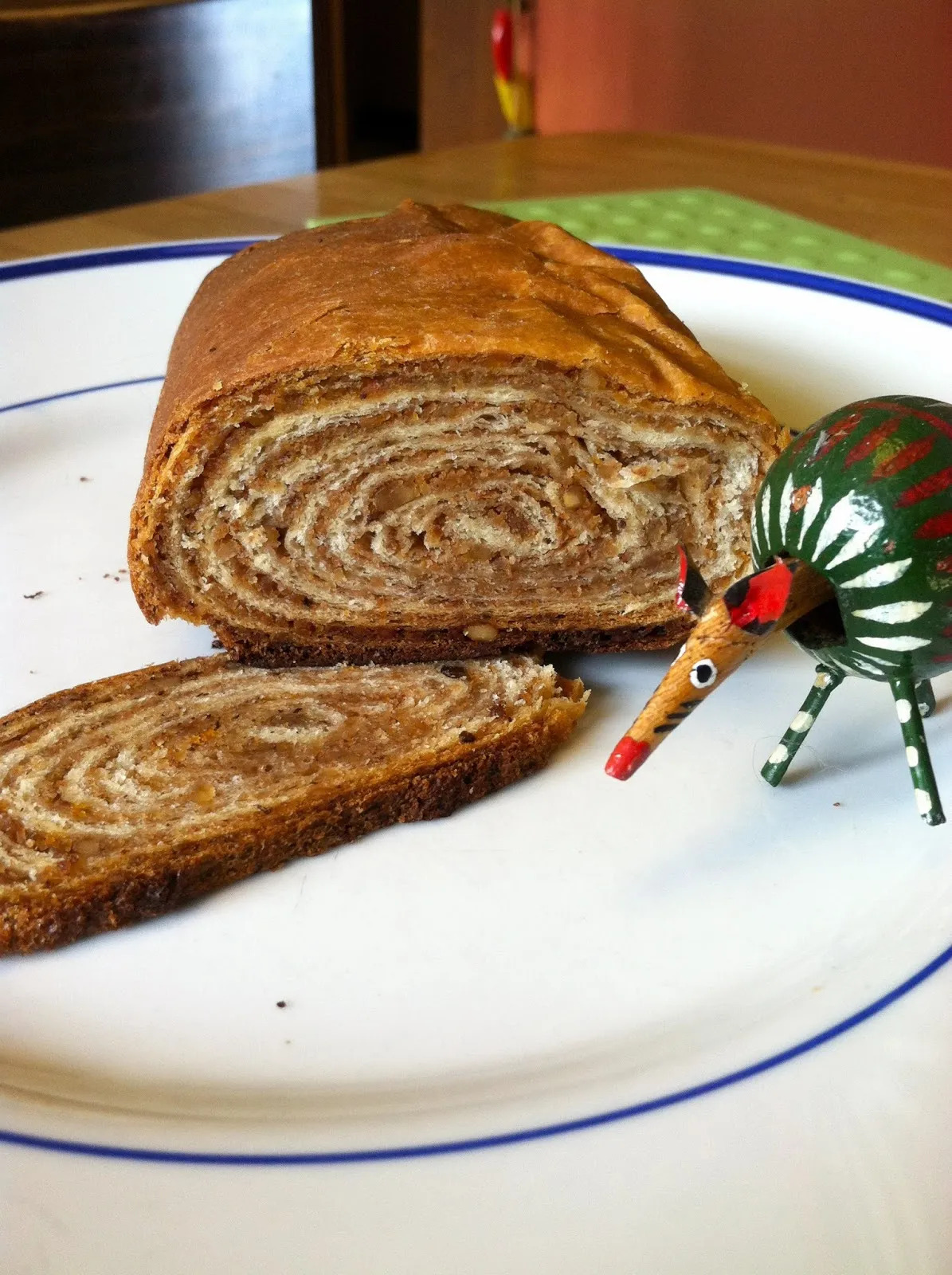
Dive into the heart of Yugoslavia with a slice of Potica, a traditional bread that’s not just a treat for the taste buds but a feast for the soul! This delightful loaf, filled with rich ground walnuts and sweetened to perfection, is the ultimate comfort food that will transport you to a cozy kitchen bustling with family and laughter. Whether you're celebrating a special occasion or simply indulging in a moment of self-care, this Potica recipe promises to impress your friends and family. Ready to impress your palate and elevate your baking game? Let’s get started on this culinary journey!
Prep Time: 30 mins
Cook Time: 60 mins
Total Time: 1 hrs 30 mins
Cuisine: Yugoslavian
Serves: 1 loaf
Ingredients
- 4 cups all-purpose flour
- 1/4 cup sugar
- 1/2 teaspoon salt
- 2 teaspoons active dry yeast
- 1 cup milk, warmed
- 1/2 cup butter, melted
- 3 large eggs
- 1 cup ground walnuts
- 1/2 cup sugar (for filling)
- 1 teaspoon vanilla extract
Instructions
- In a large mixing bowl, combine 4 cups of all-purpose flour, 1/4 cup of sugar, and 1/2 teaspoon of salt. Mix well to ensure the dry ingredients are evenly distributed.
- In a small bowl, dissolve 2 teaspoons of active dry yeast in 1 cup of warmed milk. Let it sit for about 5-10 minutes until it becomes frothy, indicating that the yeast is activated.
- In another bowl, whisk together 3 large eggs and 1/2 cup of melted butter until well combined.
- Once the yeast mixture is frothy, add it to the egg and butter mixture. Stir well to combine.
- Gradually add the wet mixture to the dry ingredients, mixing with a wooden spoon or your hands until a soft dough forms.
- Turn the dough out onto a lightly floured surface and knead for about 8-10 minutes, or until the dough is smooth and elastic.
- Place the kneaded dough into a greased bowl, cover it with a clean kitchen towel, and let it rise in a warm area for about 1 hour, or until it has doubled in size.
- While the dough is rising, prepare the filling. In a medium bowl, combine 1 cup of ground walnuts, 1/2 cup of sugar, and 1 teaspoon of vanilla extract. Mix until well combined.
- After the dough has risen, punch it down to release any air bubbles. Turn it out onto a floured surface and roll it out into a rectangle, approximately 1/4 inch thick.
- Spread the walnut filling evenly over the rolled-out dough, leaving a small border around the edges.
- Starting from one of the long sides, carefully roll the dough into a tight log. Pinch the seams to seal the roll and tuck the ends under.
- Place the rolled dough seam-side down in a greased loaf pan. Cover it again with a towel and let it rise for another 30 minutes.
- Preheat your oven to 350°F (175°C) while the dough is rising.
- Once the dough has risen again, place it in the preheated oven and bake for 60 minutes, or until the bread is golden brown and sounds hollow when tapped on the bottom.
- Remove the potica from the oven and let it cool in the pan for about 10 minutes before transferring it to a wire rack to cool completely.
- Once cooled, slice the potica and serve. Enjoy your delicious Yugoslavian bread!
Tips
- Yeast Activation: Ensure your milk is warm, not hot, to properly activate the yeast. If it’s too hot, it can kill the yeast, preventing your dough from rising.
- Kneading Technique: Knead the dough until it’s smooth and elastic. This step is crucial for developing the gluten, which gives the bread its structure and chewiness.
- Rising Environment: For the best rise, place your dough in a warm, draft-free area. You can create a warm environment by turning on your oven for a minute, then turning it off and placing the dough inside.
- Filling Variations: Feel free to experiment with the filling! You can add cinnamon, cocoa powder, or even chocolate chips to the walnut mixture for a unique twist.
- Baking Check: To ensure perfect baking, tap the bottom of the loaf; it should sound hollow when done. If you’re unsure, use a thermometer—the internal temperature should reach about 190°F (88°C).
- Cooling: Allow the Potica to cool in the pan for a few minutes before transferring it to a wire rack. This helps maintain its shape and texture.
- Serving Suggestions: Serve your Potica warm or at room temperature, and consider pairing it with a cup of tea or coffee for a delightful afternoon treat.
Nutrition Facts
Calories: 350kcal
Carbohydrates: 45g
Protein: 9g
Fat: 18g
Saturated Fat: 8g
Cholesterol: 75mg
